The parish separation between Heugem and Cadier, 1266

A characteristic feature of the medieval settlement history of Dutch South Limburg is that the oldest villages lay on the edge of the higher, densely wooded plateau or hill country. From these villages, this higher ground was cleared and brought into cultivation between the eleventh and thirteenth centuries. Place names ending in -rade, -bos and -holt still recall this. The new settlements often grew up along a through road.
The first churches also stood in those village centres. For church services, the inhabitants of the new settlements depended on these villages in the valley. In all weathers and on poor roads, such a visit was quite an undertaking. As a result, the desire grew for a place of worship of their own in their own village. It usually began with a chapel, served by the priest from the parish church ‘down below’. But over time people wanted their own church with their own priest. Such a separation usually met with resistance from the ‘mother church’, because fewer parishioners also meant fewer churchgoers and less income.
Examples of this development include Sint-Geertruid, separated from Breust in 1222, and also Mheer and Noorbeek, definitively separated from Sint-Martens-Voeren in the sixteenth century. Eckelrade, too, which began as a foundation from Gronsveld in the fourteenth century, had its own chapel but did not achieve independence until 1834.
Sometimes the founding of a new parish can be dated precisely; in other cases independence grew in practice and was later formalised at a certain point by the higher ecclesiastical authority. An example of the first case is Cadier becoming independent of Heugem in 1266.
The church of Heugem is very old, as the name of its patron saint, Saint Michael, suggests. Heugem also appears in the charter of Pope Adrian IV of 1158, in which the chapter of Onze-Lieve-Vrouw is confirmed in the right of patronage (the right to nominate a parish priest) and the tithe rights (the right to a tenth of the grain harvest) in Heugem. The chapter may once have acquired these rights from the Bishop of Liège, as the bishops endowed the chapter with many properties around Maastricht. Political ties between Heugem and Liège also continued to exist later on.
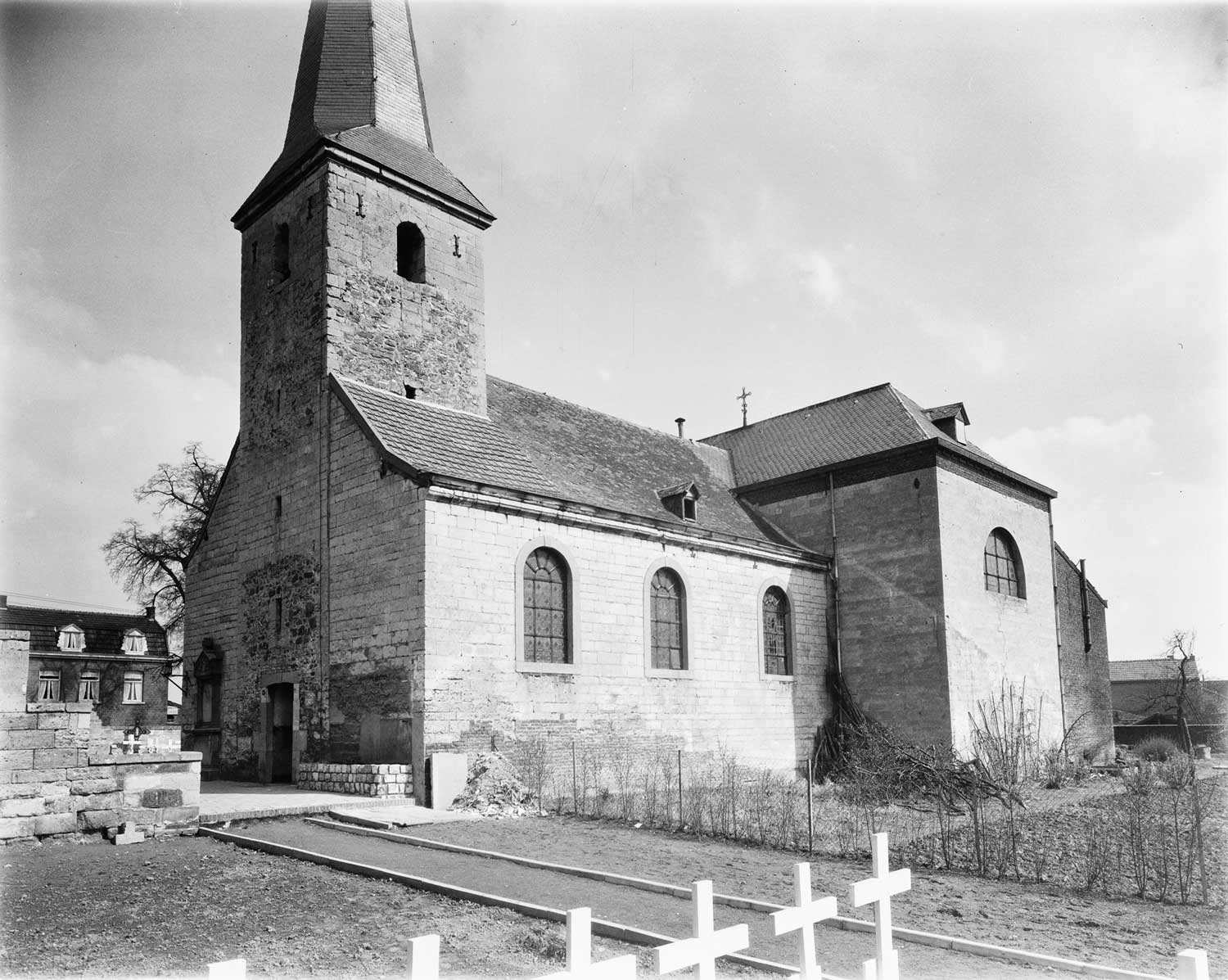
Cadier's independence in 1266 is an almost classic example of such a separation between mother and daughter church. The priest of Heugem said Mass on Sundays and feast days in the existing chapel at Cadier, but newborn children in Cadier sometimes died unbaptised because the road was impassable in winter. That route will partly have followed the Bronckweg, which still runs from Cadier to Gronsveld. There was therefore a need for a baptismal font of their own. Moreover, a new priest had to be able to administer all the sacraments – in other words, to care for his parishioners from the cradle to the grave.
The inhabitants of Cadier put their problem to Magister Marcoald, one of the archdeacons of the Bishop of Liège. The diocese of Liège, which stretched from North Brabant deep into the southern Ardennes, had eight of these officials. They were assistants to the bishop who supervised parishes and, by virtue of that office, were also authorised to carry out certain administrative acts on the bishop's behalf.
Marcoald found that the wish of the inhabitants of Cadier to have their own parish was justified. In the end, four clergymen were involved as interested parties in the separation between Heugem and Cadier: Marcoald himself; Reinier, scholaster of the chapter of Tongeren and the bishop's supervisor in spiritual matters; Gerard of Nassau, Archdeacon of Liège, but acting here mainly as provost of Onze-Lieve-Vrouw in Maastricht and thus patron of the church of Heugem; and finally Simon, parish priest of Heugem and canon of Onze-Lieve-Vrouw in Maastricht. The last two were directly interested parties. Cadier was given its own priest with the right to baptise and all other ecclesiastical powers. As his salary he received a fixed income worth seven and a half marks, as well as occasional fees for services. The priest of Heugem was to be compensated for his loss of income with two shillings a year, payable by the parish of Cadier.
The ties with Heugem were not entirely severed. As had long been the custom, the inhabitants of Cadier remained obliged to attend the annual ‘synod’ of Heugem. At such a parish assembly, also known as the ‘seend’, breaches of church law and offences against public morals were dealt with. The inhabitants of Cadier also had to attend the processions on the Rogation Days, the three days before Ascension Day. Finally, the priest of Heugem retained the right to nominate a new priest for Cadier whenever the post fell vacant.
The compulsory visits from Cadier to Heugem probably disappeared at the beginning of the seventeenth century. The seend also fell into disuse at that time. However, the right of the priest of Heugem to nominate a priest in Cadier for appointment continued to exist until the end of the eighteenth century.
Main image: Josua de Grave, View of Heugem and Gronsveld from the Sint-Pietersberg, 1670.
partners


donors